
Guide
What a 30-Day Competition Routine Could Look Like
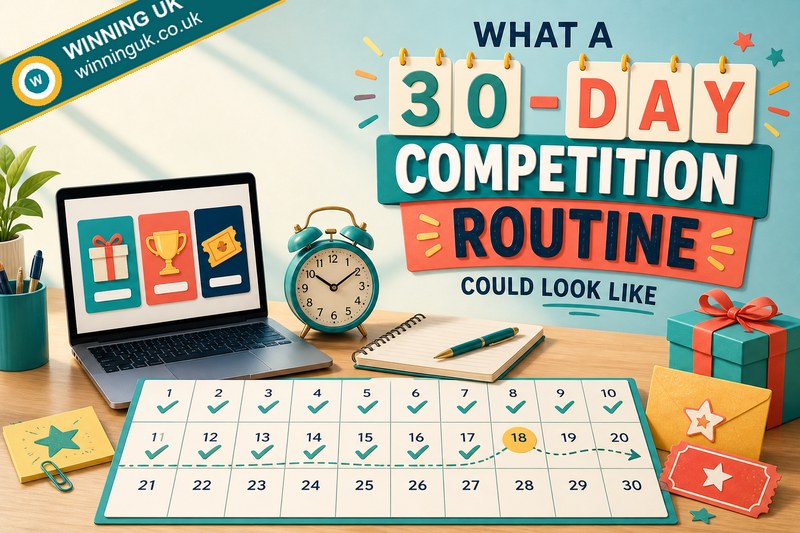
A 30-day competition routine can help you work out which entry methods suit you, how much time you want to spend and whether you need a simple tracking system. This is an example routine, not a diary of one person’s results and not a promise that regular entry will lead to a win.
The aim is to make entering organised and enjoyable without allowing it to take over your time or budget.
Before you begin
Decide what you want from the month. You might want to learn how different entry routes work, find prizes you would genuinely use or build a habit of checking closing dates. Set a time limit before you start, and decide whether you will enter free competitions only.
- Choose a daily or weekly time limit.
- Decide which prize categories interest you.
- Read the organiser’s terms before entering.
- Use a separate email address if that helps you manage messages.
- Never spend money needed for bills or other essentials.

Week one: learn the basics
Start with a small number of straightforward listings. Check the closing date, eligibility, entry limit, winner-selection method and the information the organiser asks you to provide. If there is a paid route, look for any published free route and follow its instructions exactly.
Do not try to enter everything. A competition for a prize you do not want is unlikely to be a good use of your time, even if the form is quick.
Week two: start tracking entries
Use the Winning UK My Competitions tracker, a spreadsheet, notes app or paper list. Record enough information to avoid accidental duplicate entries and recognise genuine winner messages later.
- Competition and organiser name.
- Date entered and closing date.
- Entry method used.
- Prize and important restrictions.
- How the organiser says winners will be contacted.

Week three: refine the routine
Review which entries felt worthwhile. Some people prefer quick online forms, while others enjoy creative competitions or postal routes. Remove anything that feels repetitive, pressured or too expensive.
Check whether marketing consent is optional. Entering a competition and agreeing to unrelated marketing are not always the same choice.
Week four: review rather than increase
Use the final week to review your habits, not to chase a result. Count the time and money spent, check outstanding closing dates and clear entries you no longer need to track.
A useful routine should fit around normal life. If entering stops being enjoyable, feels difficult to control or encourages spending beyond your limit, take a break and read our Responsible Entry guidance.
A simple weekly pattern
- Choose two or three short browsing sessions.
- Save promising listings before entering.
- Read the official terms.
- Enter only when the route and eligibility are clear.
- Mark the listing as entered.
- Review closing dates once a week.
What success looks like
The useful outcome of a 30-day routine is not necessarily a prize. It may be a better understanding of terms, fewer duplicate entries, more control over time and spending, and a shortlist of competition types that genuinely interest you.
Browse current competitions or read our competition tracking guide.
A reusable 30-day tracking template
Use one row for each competition and record only the information you need to manage the entry. A useful template contains:
- Competition and promoter.
- Official entry and terms URLs.
- Prize and important exclusions.
- Date entered and closing date.
- Entry route and entry limit.
- Any purchase, postage or subscription involved.
- Expected winner-contact method and claim window.
- Status: saved, entered, closed or cleared.
Avoid storing passwords, identity documents, card details or copies of unnecessary personal data in the tracker.
Weekly review questions
- Did I enter only for prizes I would use?
- Did I stay within my time and spending limits?
- Were the terms available before entry?
- Did I accidentally opt into marketing I did not want?
- Are any fixed travel or claim dates approaching?
- Can closed entries now be removed from my tracker?
The ICO says direct-marketing consent should involve genuine choice and should be separate, specific and unambiguous. If a competition form combines entry with email or text marketing, read the wording carefully and look for a separate choice.
CAP guidance says promoters should make significant conditions such as the entry method, closing date, prize and eligibility clear. If those basics are missing, pause rather than treating the entry as another item to complete.